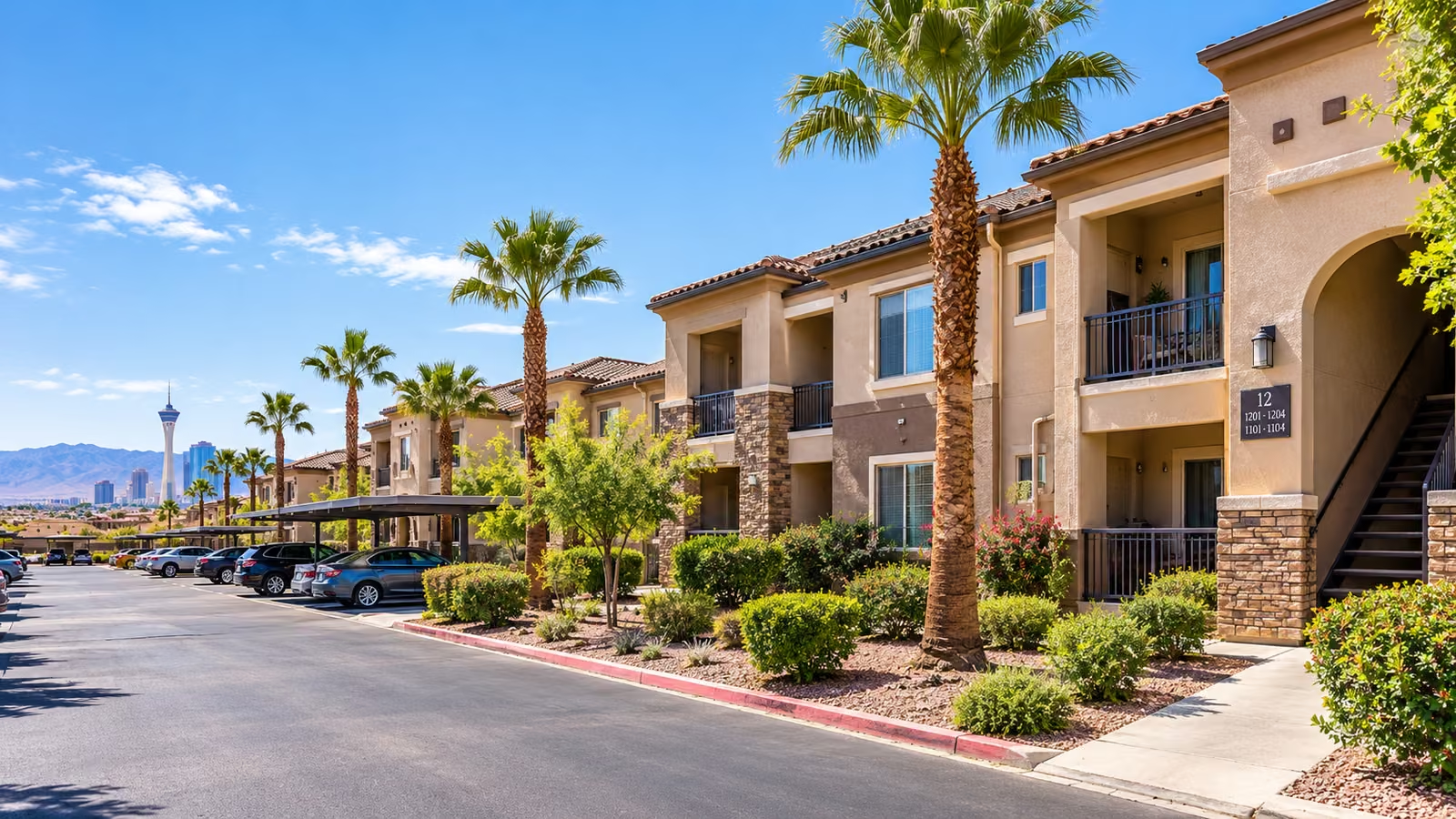
Condos and townhomes are a big part of the Las Vegas market. They’re often the most affordable way to buy in the valley, and they’re popular with first-time buyers, retirees, and anyone who would rather not maintain a yard in 110-degree heat.
They also raise a question single-family buyers don’t have to think about: what are you actually responsible for? The answer shapes what a home inspection covers and what you should ask the homeowners association. Absher Home Inspections inspects condos and townhomes across the valley, and here’s how it works.
Your unit, the HOA, and the parts in between
In a typical Las Vegas condo community, the association maintains the roof, the exterior walls, the grounds, and shared parts like stairways, carports, and pools. The owner is responsible for the inside of the unit.
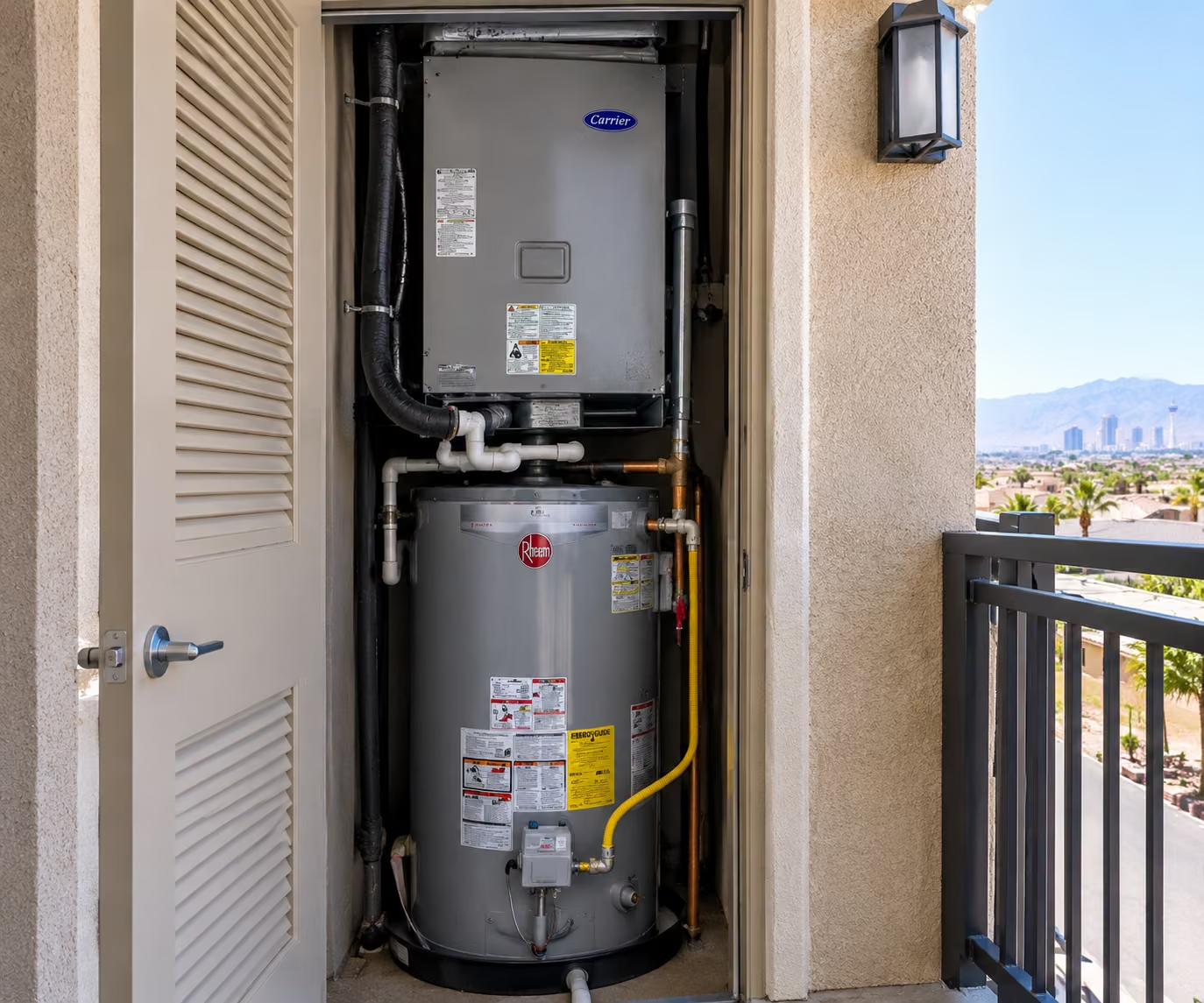
The lines aren’t always where buyers expect, though. In many communities, the owner is responsible for equipment that sits outside the unit, like an air conditioning condenser on the roof or a water heater in a balcony closet, because it serves only that unit. Windows, sliding doors, balconies, and plumbing inside the walls can fall on either side of the line.
The association’s declaration (the CC&Rs) spells it out, and every community is a little different. Read the maintenance section before your inspection period ends, so you know which findings would be yours to fix.
What the inspection covers inside the unit
Inside the unit, a condo inspection is close to a full home inspection:
- Air conditioning and heating, including the air handler or furnace, the thermostat, airflow at the registers, and the condensate drain
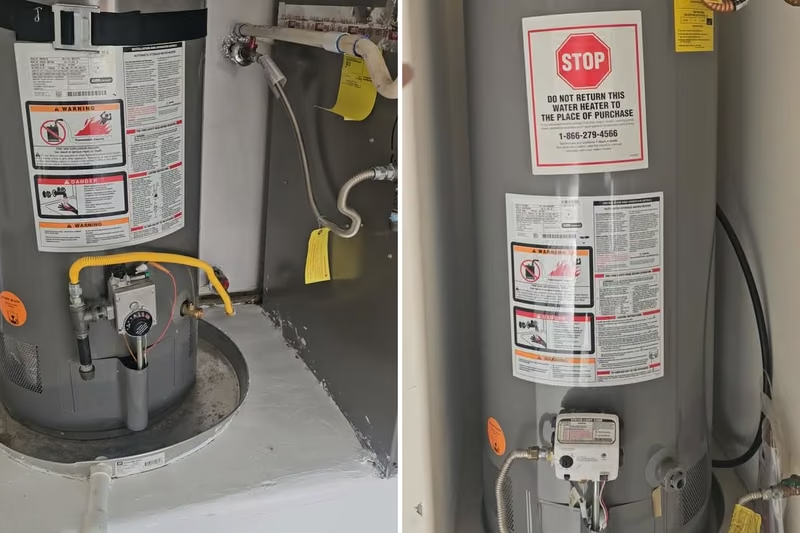
- The water heater, including its venting, strapping, relief valve, and drain pan. The details are in Gas Water Heater Safety in Las Vegas Homes.
- Plumbing: fixtures, drains, shutoff valves, visible supply piping, and signs of leaks. Condos from the building boom of the late 1990s and 2000s can have Kitec plumbing.
- Electrical: the panel, outlets, switches, and GFCI and AFCI protection
- Windows and doors, including failed dual-pane seals and sliding doors that drag or don’t lock
- Built-in appliances, smoke alarms, and the dryer vent
- Walls, ceilings, and floors, looking for stains, cracks, and soft spots
Equipment outside the unit
Condo equipment is often tucked into odd places: a closet off the balcony, a mechanical room down the hall, or a condenser on the roof among a dozen others. We inspect what serves the unit wherever it can be safely reached, and we note anything we couldn’t get to.
It helps to find out ahead of time which condenser is yours and whether the HOA allows roof access. If the roof is locked or the association doesn’t allow inspectors up there, the report will say so. In that case, ask the HOA or the seller for the condenser’s age and service history.
Shared walls, floors, and ceilings
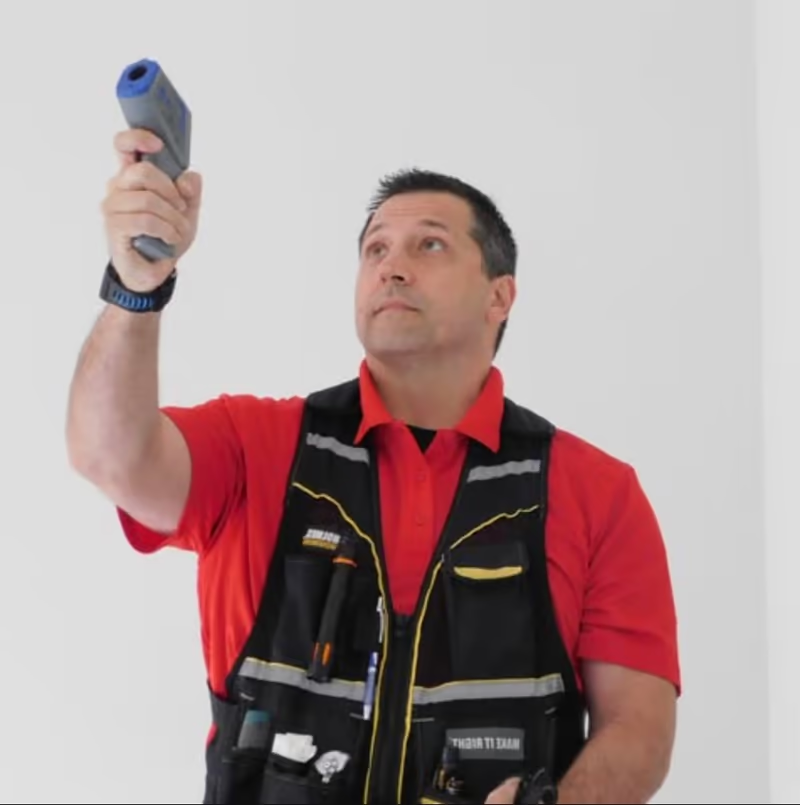
Living close to your neighbors means sharing their plumbing. The most common condo finding we see from shared construction is water from above: a stain on a ceiling under a bathroom, a kitchen, or a water heater in the unit upstairs. A dry stain may be an old, repaired leak, or it may be active. We note stains, check them with a moisture meter where we can, and recommend asking the seller and the HOA about the history.
We also look at the separations between units where they’re visible, such as gaps or holes around pipes and wiring through shared walls and ceilings, and at the attic access in top-floor units.
Balconies, patios, and stairs
Balconies take the full force of the desert sun. We look at railings for loose posts and wide gaps, at the deck surface for cracks and failed coatings, and at drainage. A balcony that holds water can leak into the unit or the one below. On the outside walls we can reach, we check for the same stucco cracks and window gaps we’d look for on a house.
Townhomes: often more of the building is yours
A townhome can be set up a lot like a condo or a lot like a house. In many communities, the townhome owner owns the lot, the roof, and the exterior walls, and the HOA handles only the common areas. Then the inspection includes more: the tile roof where it’s safely accessible, the attic and ductwork, the garage, and the exterior.
Check the CC&Rs, and mention the property type when you book so the inspection is planned for what you’ll actually own.
What to ask the HOA
A home inspection looks at the condition of the property. It doesn’t look at the association’s finances, and in a condo, those can matter as much as the unit. In Nevada, the seller provides a resale package with the association’s governing documents, budget, fees, and other disclosures, and buyers have a short window after receiving it to cancel. Your agent can confirm the timing. While you have it, look for answers to these:
- Who maintains what? The roof, the exterior, windows, balconies, and the plumbing inside the walls.
- How healthy are the reserves? The reserve study shows what big projects are coming and whether there’s money set aside for them.
- Are there special assessments, current or planned?
- What does the master insurance policy cover, and where does your own condo (HO-6) policy need to pick up?
- Are there any known issues with the building, like roof leaks, plumbing failures, or pending repairs or lawsuits?
Planning the inspection
A condo inspection usually takes less time than a house, but not always. Equipment in remote closets, roof access that needs an HOA escort, and gate codes can slow things down. Before inspection day:
- Get gate and building codes to us, and arrange access to any locked closets, mechanical rooms, or the roof.
- Make sure the utilities are on, including the gas for the water heater.
- Tell us about anything unusual, like a unit that was combined with its neighbor or a recent remodel.
There’s more on getting ready in How to Prepare for a Home Inspection in Las Vegas, and on pricing in What Does a Home Inspection Cost in Las Vegas?
Common questions
Do I need an inspection if the HOA maintains the outside of the building?
Yes. Even when the association maintains the roof and exterior, the inside of the unit is usually the owner’s responsibility: the air conditioning, water heater, plumbing fixtures, electrical, appliances, windows, and finishes. Those are the systems a condo inspection focuses on.
Does a condo inspection cover the roof and common areas?
A condo inspection looks at the parts of the building that serve the unit and can be safely reached, and notes anything visible from the unit, like the balcony, exterior walls, and nearby roof areas. It doesn’t evaluate the whole building, other units, or the association’s finances, and roof access is often restricted by the HOA.
Is a townhome inspected differently from a condo?
Often, yes. Depending on the community’s documents, a townhome owner may own the roof, exterior walls, and yard, which puts more of the building in the inspection. The association’s declaration (the CC&Rs) says who is responsible for what.