Drive through almost any Las Vegas neighborhood built since the 1980s and you’ll see the same thing: row after row of concrete tile roofs in tan, terracotta, and brown. Tile makes sense here. It shrugs off the sun, it won’t burn, and a well-made concrete tile can outlast the mortgage.
That durability creates a common misunderstanding, though. The tile you see is not what keeps the water out. It sheds most of the rain and shields what’s beneath it, but the real waterproofing is the underlayment, the felt or synthetic membrane laid over the roof deck under the tile. In the Mojave, that layer is where roofs quietly age.
Why the underlayment is the part to worry about
Summer roof surfaces in the Las Vegas valley get far hotter than the air temperature, and the space under the tiles bakes along with them. Year after year of that heat dries out traditional felt underlayment until it turns brittle, cracks, and tears. The tiles on top can look nearly new while the membrane under them has reached the end of its life.
Many older valley homes still have their original felt underlayment, and in this climate felt commonly lasts roughly 20 to 25 years. It often goes unnoticed because Las Vegas gets so little rain. A failed underlayment can sit for years without causing a problem — until a monsoon storm in July or August drives water sideways under the tiles and into the attic.
The usual fix is an underlayment replacement (sometimes called a “lift and relay”): roofers remove the tiles, install new underlayment, and reset the original tiles, replacing any broken ones. It costs far less than a full re-roof, but it is still a significant expense, so it is worth knowing about before you buy.
What a home inspector looks for on a tile roof
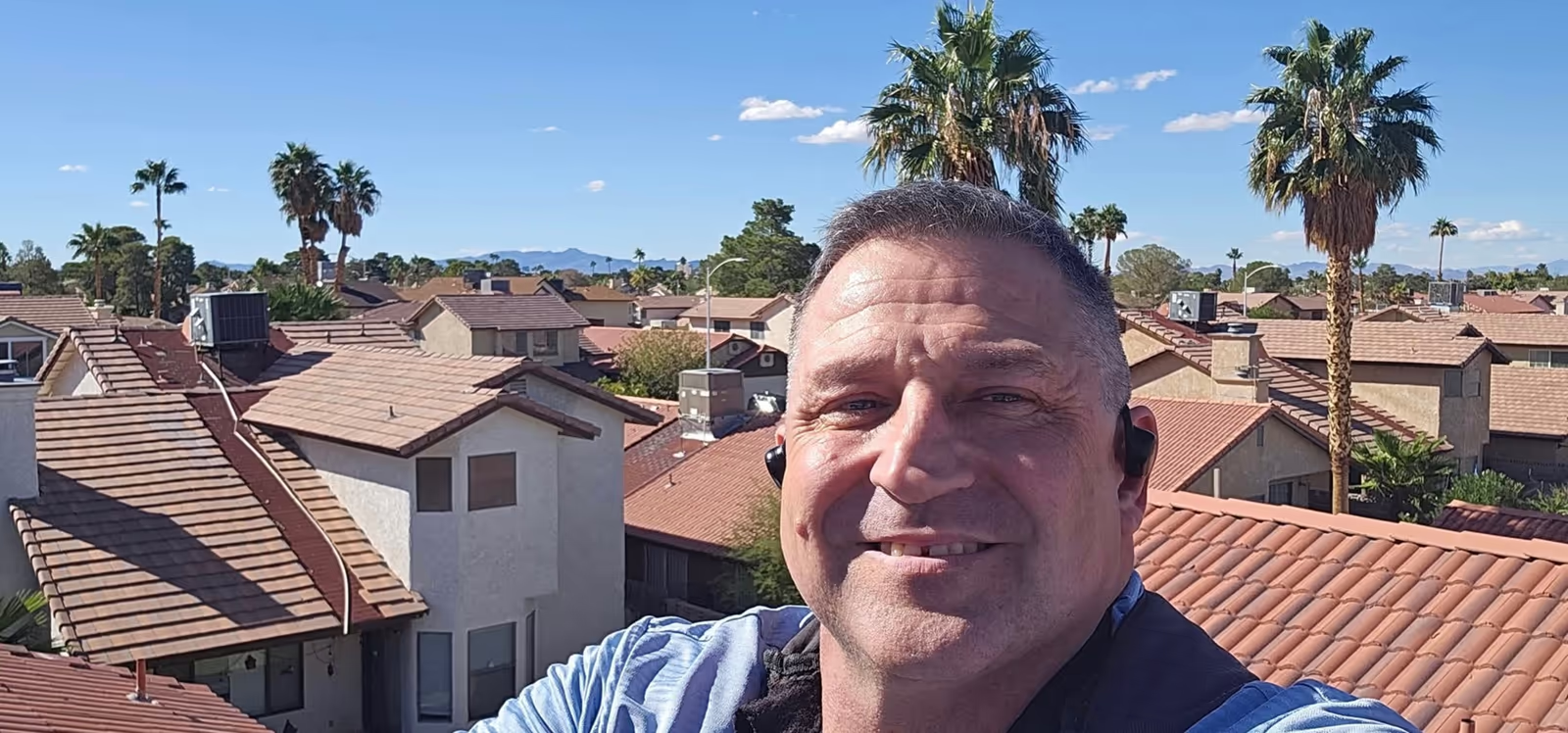
Where the roof can be walked safely, the inspection is done on the roof itself, not from the driveway. Tile needs careful footing; a heavy step in the wrong place can crack a tile, so the inspector walks the lower edge of each tile where it is supported. On a typical Las Vegas tile roof, we look at:
- Cracked, broken, or slipped tiles. These often cluster where people have walked: around satellite dishes, solar arrays, and along rooflines where holiday lights get hung.
- Exposed or deteriorated underlayment. Anywhere a tile is missing or broken, the underlayment beneath can be seen directly. Brittle, torn, or sun-bleached felt tells you a lot about the rest of the roof.
- Flashing at walls, chimneys, skylights, and valleys. Stucco-to-roof transitions are a frequent leak point in desert homes.
- Roof penetrations such as plumbing vents, exhaust fans, and gas flues, and whether their flashings are sealed and intact.
- Bird stops and eave closures. Pigeons love the gaps under tile. Nesting debris clogs drainage paths and holds moisture against the underlayment.
- Ridge and hip tiles and the mortar or fasteners holding them. Loose ridge tiles are a wind problem during storm season.
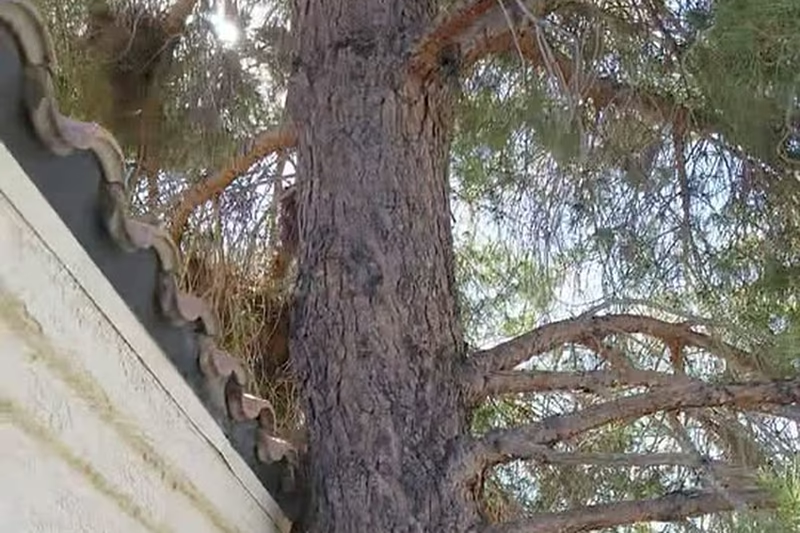
- Overhanging branches. Trees that touch the roof crack tiles in the wind and fill valleys with debris. (See Trees Too Close to the House.)
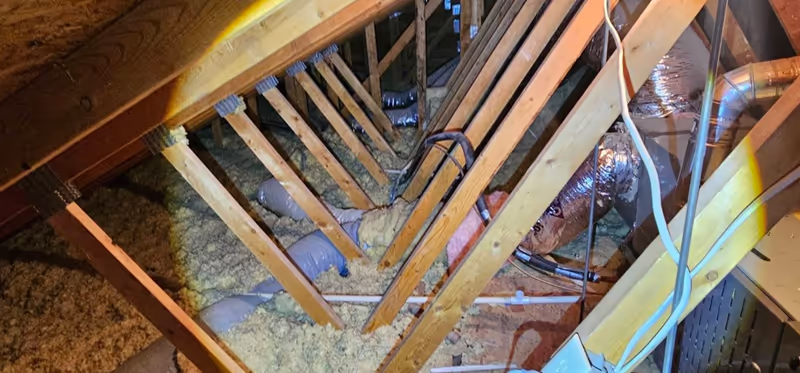
The inspection doesn’t stop at the roof. The most direct evidence of a leak is usually in the attic: water stains on the roof sheathing, darkened framing, or compressed and stained insulation beneath a penetration. Checking the roof from both sides gives a much clearer picture than either view alone.
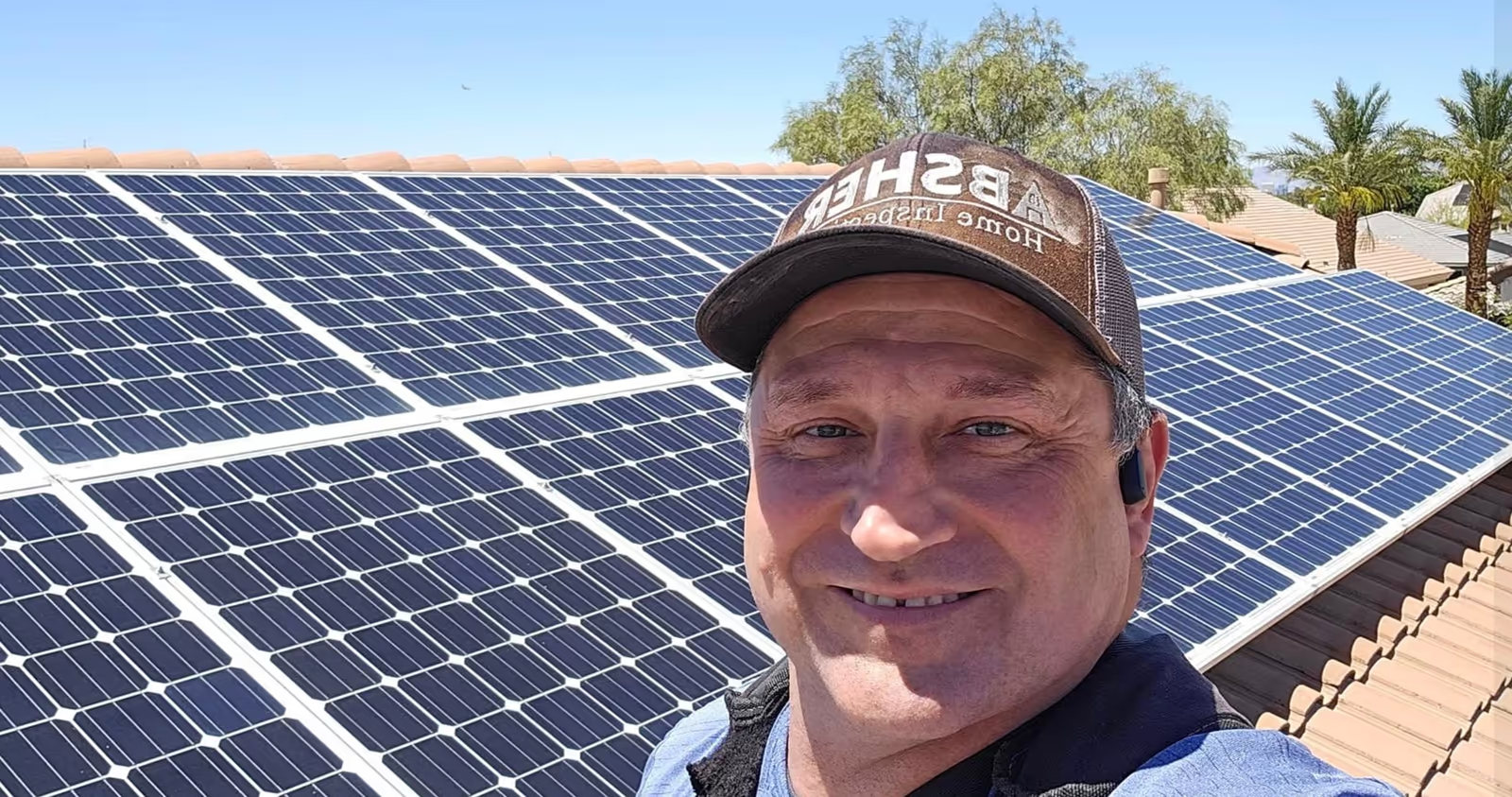
Solar panels on a tile roof
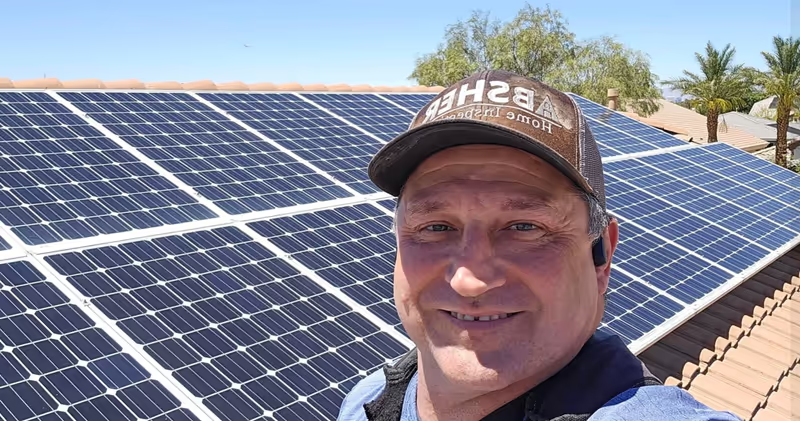
Rooftop solar is increasingly common in Southern Nevada. Every panel mount goes through the tile and underlayment, so each one depends on proper flashing. It is also common to find cracked tiles around arrays from installation traffic, and pigeons nesting in the shaded space under the panels. When a home has solar, we note the condition of the roof around and beneath the array as far as it can be seen. Keep in mind that a future underlayment replacement will require removing and reinstalling the panels, which adds to the cost. (More in Buying a Las Vegas Home with Solar Panels.)
Flat and low-slope roofs
Plenty of Las Vegas homes, especially mid-century houses and many newer modern builds, have flat or low-slope sections behind parapet walls, often finished with a foam or elastomeric coating. These roofs have their own weak points: ponding water, cracked or worn coatings that have lost their UV protection, clogged scuppers and drains, and deteriorated parapet caps. The desert sun is hard on coatings, and most need to be recoated periodically to keep protecting the roof beneath.
Questions to ask when buying a home with a tile roof
- How old is the underlayment? The age of the house doesn’t always answer this. Ask whether the underlayment has ever been replaced and whether there are receipts or a warranty.
- Have there been any roof leaks or repairs? Nevada sellers disclose known defects on the Seller’s Real Property Disclosure form, which is a good starting point for the conversation.
- Has anything been installed on the roof? Solar, satellite dishes, and rooftop HVAC equipment all mean added foot traffic and penetrations.
If the inspection turns up widespread cracked tiles or brittle underlayment, the usual next step is an evaluation and estimate from a licensed roofing contractor before your inspection contingency ends. That gives you a real number to work with, whether you negotiate a repair, a credit, or simply plan for it.
A tile roof is one of the best-suited roofs for the Las Vegas climate. It just needs to be understood for what it is: a long-lived shell over a membrane that doesn’t last as long.